
How to Plan a Corporate Video That Connects With Your Audience
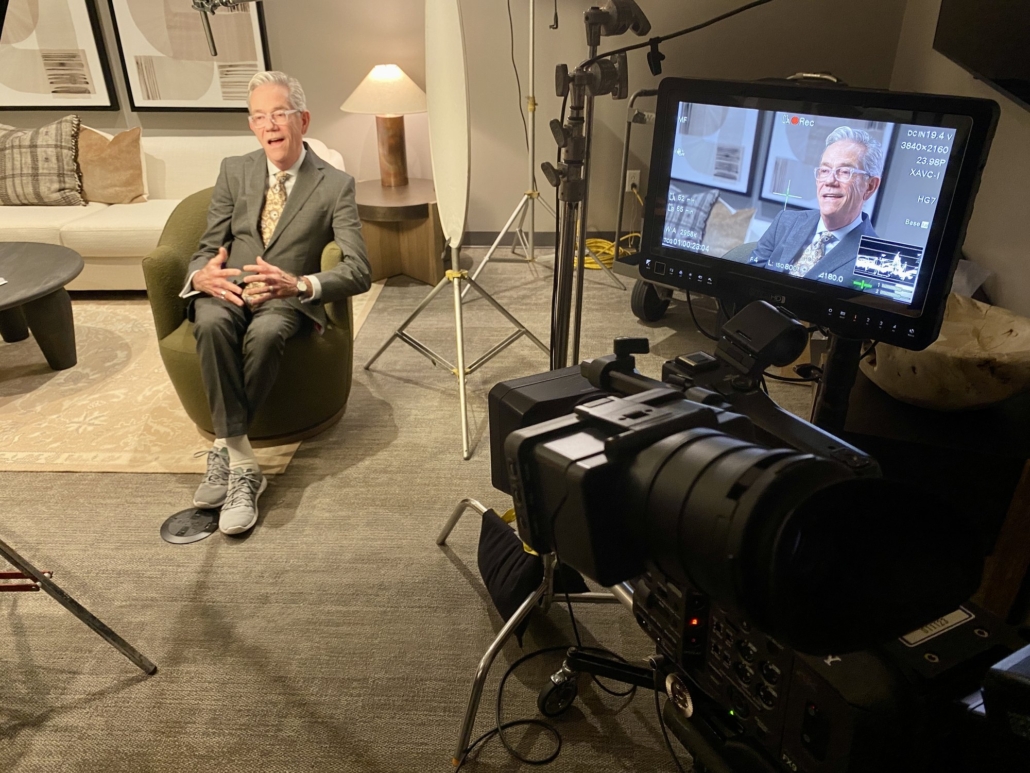
A successful corporate video begins with a clear reason for being made. The camera, lighting, graphics, and editing all matter, but they work best when the project starts with a focused audience and a specific communication goal.
Whether a company is introducing its brand, launching a product, recruiting employees, documenting a customer story, or explaining a service, thoughtful planning helps the final video feel meaningful. It also keeps production efficient and gives the finished content a longer useful life.
Start With One Primary Goal
Trying to make one video accomplish everything usually creates a message that feels scattered. Begin by identifying the single most important action or understanding you want from the viewer. Should they recognize the brand, request information, visit a showroom, understand a process, apply for a job, or feel confident choosing a product?
A primary goal gives the project a filter. Every interview question, scene, graphic, and edit can be evaluated by whether it helps move the audience toward that outcome.
Define the Audience Before Writing the Script
A corporate message should sound different when it is speaking to prospective customers, dealers, investors, employees, or community partners. Defining the audience early helps determine the right language, level of detail, pace, and visual approach.
Useful planning questions include:
- Who needs to see this video?
- What does that audience already know about the company or topic?
- What concern or question should the video address?
- Where will viewers encounter the video?
- What should they do after watching?
These questions make it easier to choose between formats such as a brand overview, testimonial, product demonstration, recruiting video, event recap, training piece, or short social campaign.
Build the Story Around People
Corporate videos often need to communicate facts, but audiences remember people. A customer explaining how a service solved a problem, an employee showing pride in a process, or a leader describing a clear vision gives the message a human center.
Interviews should sound natural rather than memorized. A strong production plan prepares questions that encourage concise, specific answers and pairs those interviews with supporting footage. This supporting footage, often called B-roll, shows the people, products, spaces, and actions being discussed.
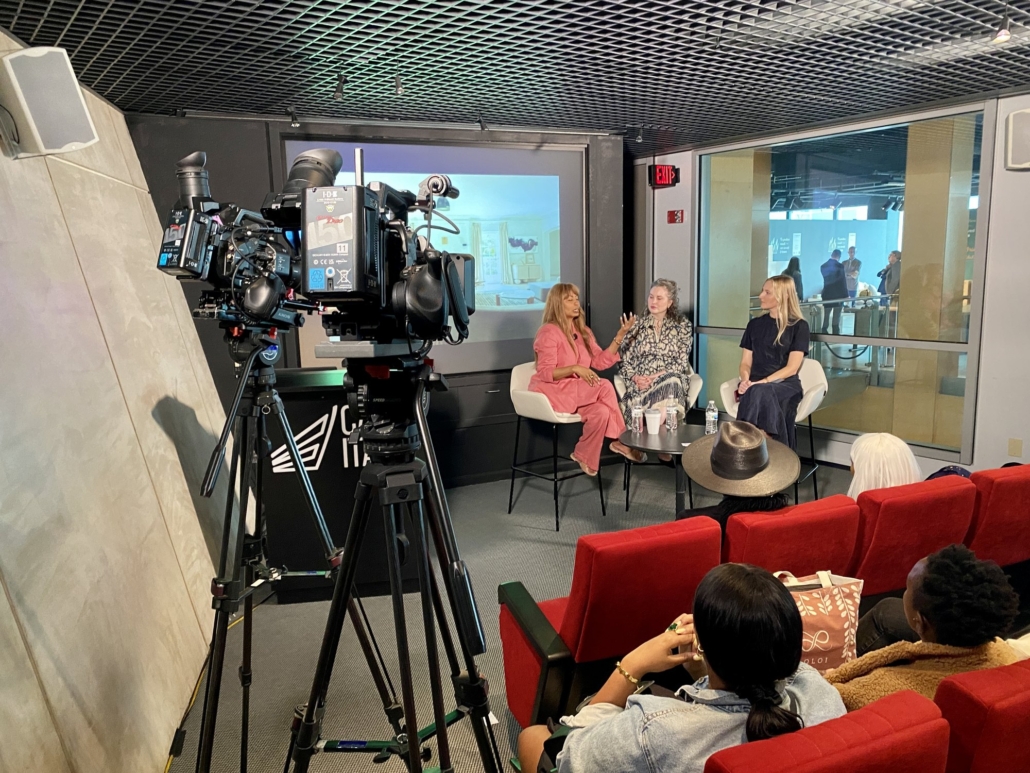
A multi-camera setup captures a panel conversation as it unfolds naturally.
Use Pre Production to Prevent Expensive Surprises
Pre-production turns an idea into an executable plan. Depending on the project, that process may include scripting, storyboarding, location scouting, scheduling, casting, set design, interview preparation, and equipment planning.
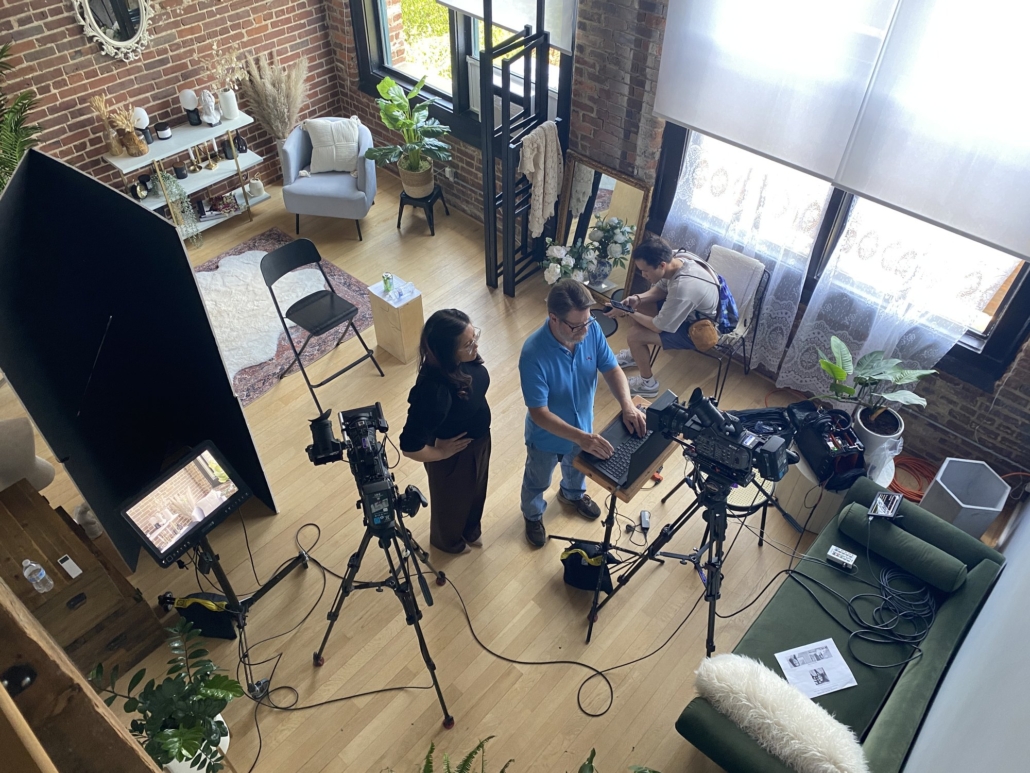
Reviewing the shot plan on set before the cameras roll.
A detailed plan helps everyone arrive knowing what needs to happen. It can also reveal practical issues before the shoot, such as noisy locations, limited power, product availability, employee schedules, wardrobe conflicts, brand-approval requirements, or the need for teleprompter and green-screen support.
Capture More Than One Final Video
A corporate video does not have to be a single asset. When distribution needs are considered before filming, the production can capture material for a longer website video, shorter social edits, vertical clips, recruiting segments, presentation openers, still frames, and future B-roll.
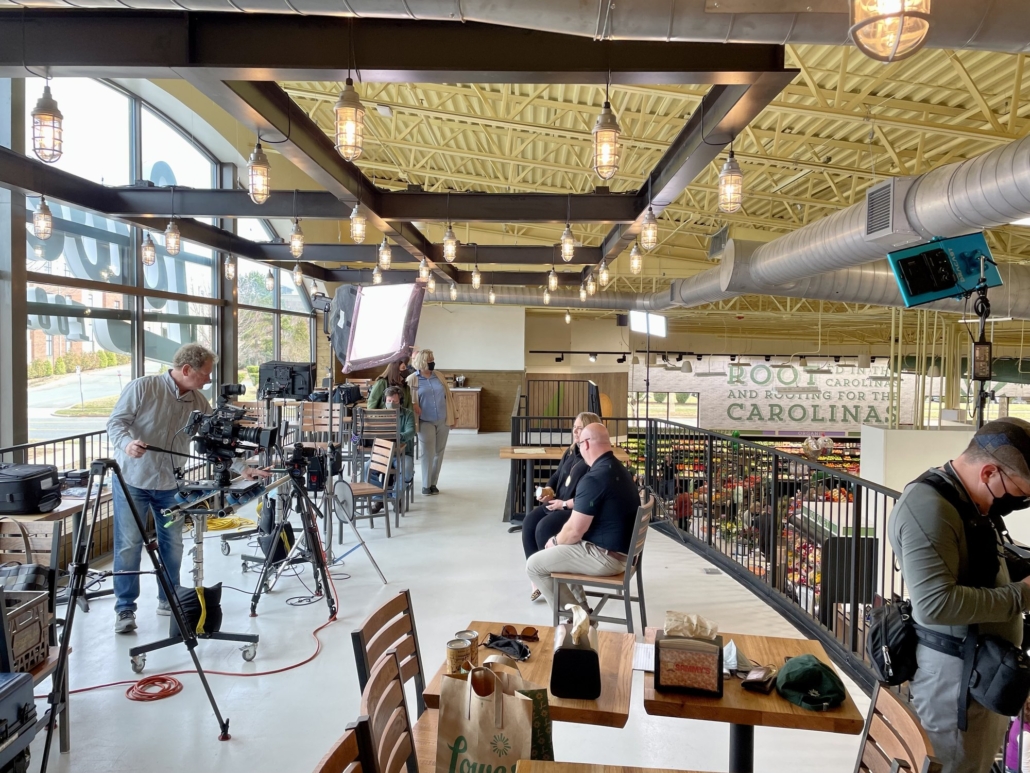
An on-location interview shoot, planned to capture several types of content in one day.
This does not mean creating unnecessary content. It means framing shots and recording answers with multiple uses in mind. A little additional planning can expand the value of a production day without requiring an entirely separate shoot for every platform.
Plan for Post Production and Delivery
Editing shapes the pace and clarity of the story. It can include selecting interview moments, organizing scenes, balancing audio, correcting color, adding motion graphics, incorporating logos, and preparing captions. Review rounds should be defined early so decision-makers know when and how to provide feedback.
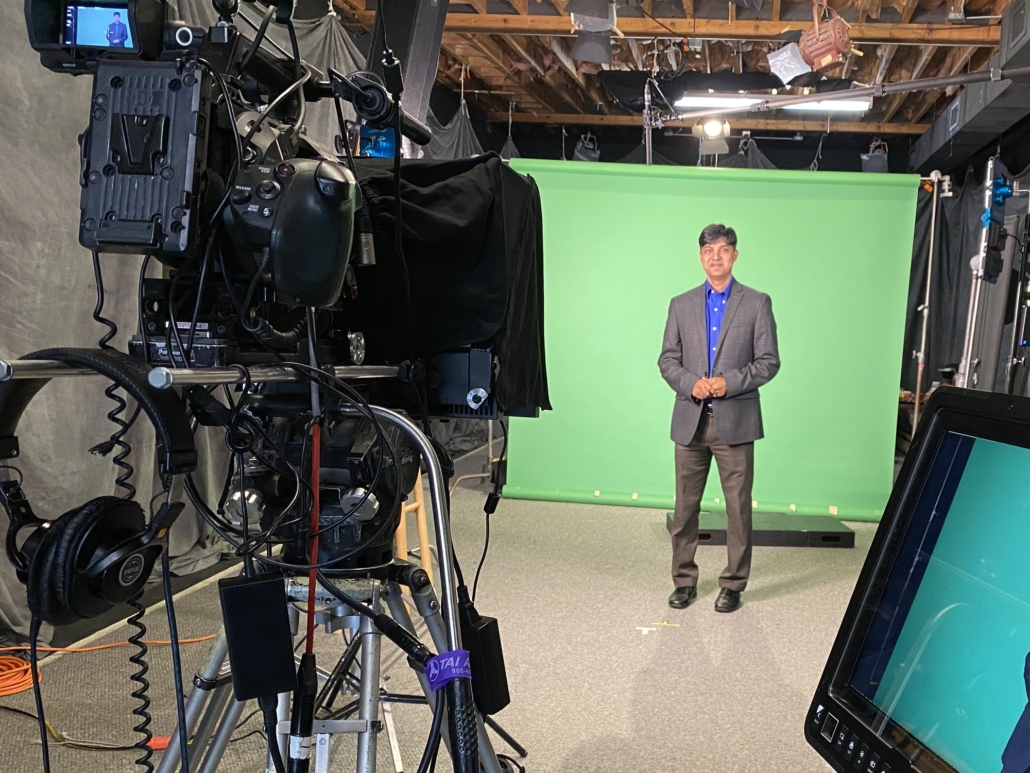
Green screen footage gives editors room to add graphics and backgrounds in post-production.
Delivery requirements also matter. A website hero video, trade-show display, YouTube upload, internal presentation, and Instagram Reel may require different dimensions, lengths, file sizes, and caption formats. Knowing those delivery platforms in advance helps the editor create the right versions efficiently.
Choose a Production Partner That Can Guide the Full Process
A full-service production team can connect creative planning with technical execution. Gefen Productions provides pre-production, on-location production, editing, motion graphics, green-screen capabilities, live streaming, photography, and experienced video crews for hire. The team travels directly to clients, allowing productions to take place in showrooms, offices, manufacturing facilities, event spaces, and other locations that best fit the project.
By managing projects from initial planning through final delivery, Gefen Productions helps clients maintain a consistent creative vision while producing content that can be adapted for websites, social media, advertising, presentations, and other marketing needs.
Turn a Clear Message Into a Useful Video
The most effective corporate videos respect the audience’s time. They know what they need to say, show the people and details that make the message credible, and end with a clear next step. If your organization is planning a brand story, product video, testimonial, recruiting piece, or corporate overview, Gefen Productions can help shape the project from initial concept through final rollout.
View our video portfolio or contact Gefen Productions to begin planning.

